The plant still comes back to you
Every tight order, trade-off, customer promise, or uncomfortable decision finds its way back to the owner.

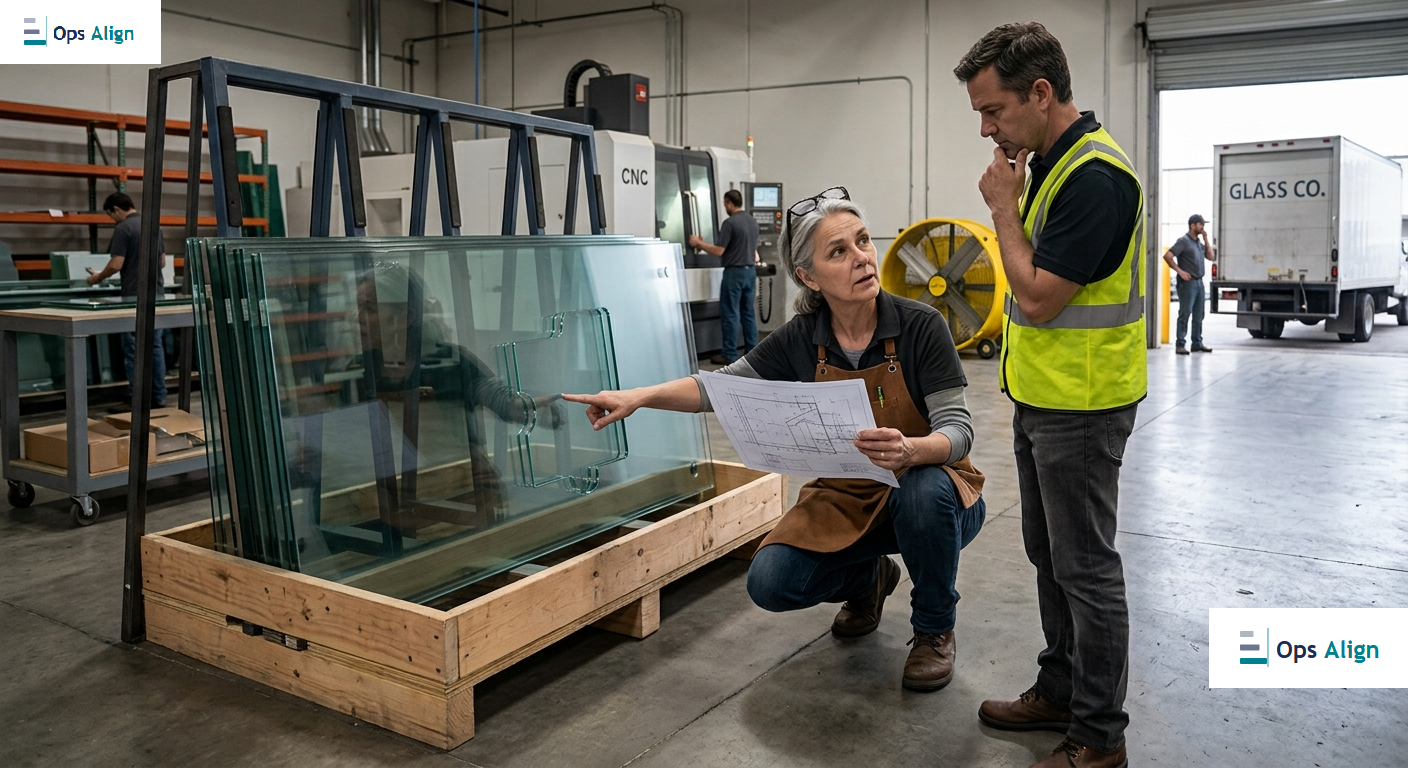
OpsAlign turns hard-won knowledge into a living operating system: trusted people, clear ownership, daily learning, and routines that keep improving long after the first push.
The issue is rarely effort. It's that judgment, follow-up, and difficult decisions still return to the owner or the same experienced people.
Every tight order, trade-off, customer promise, or uncomfortable decision finds its way back to the owner.
The tool was installed, but the knowledge, authority, and daily follow-through never became shared capability.
Good people keep the plant moving through workarounds, while newer people wait for someone else to know what to do.
My team and I work inside the operation. First, we earn trust on the floor. Then we align people, systems, and leadership behaviour around the work that matters. Finally, capability is transferred into the team.
Real change starts with trust: of the people, the work, and the owner who built the business.
Four stages that turn hard-won individual knowledge into shared capability that keeps learning and improving. See the full seven-phase practice →
Trust and permission come before recommendations. We listen first, and make visible follow-through the first proof that this engagement is different.
Owner and employee discovery finds where work, decisions, friction, and knowledge actually live — not where the org chart says they should.
Alignment and daily control connect routines, clear decisions, and capable supervisors into one operating rhythm.
Ownership and stewardship give the factory the habit of learning, improving, and carrying its strength forward without you.
A single documented Ontario SME manufacturing engagement — the value wasn't only the performance gain, it was the transfer of daily control into a more reliable operating rhythm.
-66%
-79%
+63%
The same dependency pattern shows up in different forms. The work begins by making it visible, then building the capability to remove it.
The factory runs, but key decisions and follow-up still rely on the owner being available every day.
A transition exposes the gap between strong individual people and an operation a successor or buyer can trust.
Teams care and tools are in place, but the same problems return because ownership and decision paths stay unclear.
Three clear steps — a private first look, a focused floor session, and full embedded engagement.
15 questions about your operation. Get a confidential report benchmarked against your industry, with the estimated annual dollar value of your operational gap.
Start assessment →Half a day on your floor. Top three profit leaks identified, turned into a 90/180-day, dollar-backed action plan. Findings in writing the same week.
See the session →My team and I embed in the operation through the ROOT framework until capability, ownership, and daily control transfer into your team.
Book a conversationPractical observations on the operating habits that make a factory more self-reliant.
When every grey-area question still comes back to the owner, it's hard to ever really switch off.
Read the article →Five things the buyer's ops team saw on the floor that the owner couldn't — and why it compressed the offer 22%.
Read the article →Many owner-led manufacturers don't have an improvement problem. They have a transfer problem.
Read the article →Nash Krishnan is a veteran Six Sigma Black Belt with an MBA and more than 25 years of hands-on manufacturing experience across automotive, plastics, packaging, food and beverage, architectural glass, and precision manufacturing. He's brought in when performance stalls, leadership cadence breaks down, or a transition exposes how much of the operation still depends on a few people.
After Ronin Equity Partners merged QBD with Minus Forty, Nash was placed at QBD as Operations Director, overseeing the turnaround of two sites and roughly 350 employees. He rebuilt the plant's operations end to end — process, quality, and workstation design — while restoring basic fairness and dignity for the people doing the work, and put in place the leadership structure and daily operating rhythm the business had never had.
Start a conversationLean, Six Sigma Black Belt practice, daily management, process control, and practical improvement work.
Team building, leadership practice, Crucial Conversations, supervisor development, clear decision rights.
Positive workplace culture, trust capital, employee voice, and the conditions for responsible ownership.
Knowledge transfer, cross-training, succession readiness, and routines that survive beyond a few key people.
Use the 15-question self-assessment to identify where operating discipline, ownership, and key-person risk may be holding the factory back — and see a benchmarked, dollar-quantified report.
Take the self-assessmentA focused discussion about the operating issue, the people carrying it, and what a stronger system would need to do.
Book a 20-minute conversation